DVB-T2 and Large SFNs – Some Pros and Cons
DVB-T2 is today by far, the most advanced digital terrestrial television (DTT) system. It is much more flexible, robust, and efficient than any other DTT system. DVB-T2 uses OFDM modulation, and offers a wide range of different modes, making it a very flexible standard.
Due to the multi-path immunity of OFDM, DVB-T2 allows the possibility of single frequency network (SFN) operation. A SFN is a network of synchronized transmitters, both in time and frequency, radiating identical signals. DVB-T2 enables the possibility to build much larger SFNs than what is possible for other DTT systems. For example, using a system bandwidth of 8 MHz, DVB-T allows a maximum transmitter separation distance of 67.2 km while DVB-T2 allows 159.6 km.
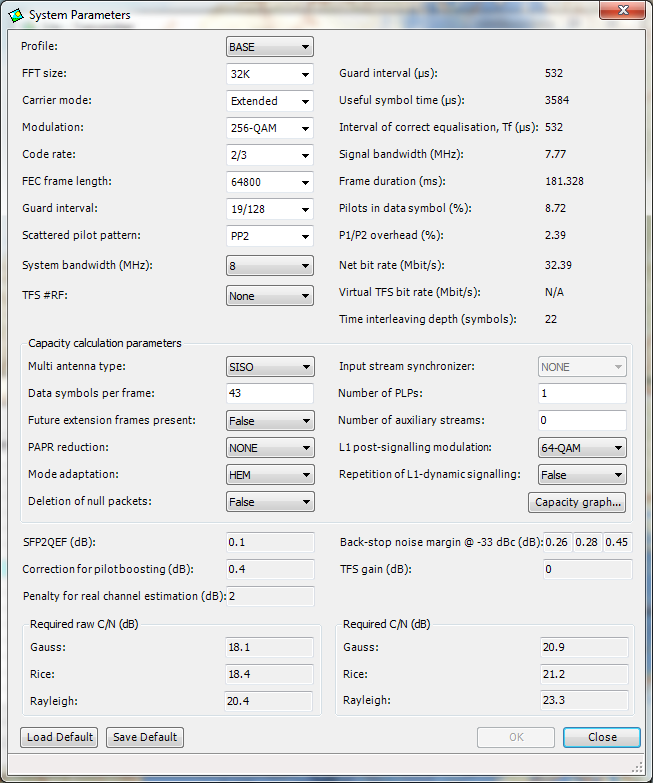
Below follows an example where I have used PROGIRA® plan to calculate coverage probability for fixed reception (receiving antenna height is 10 meter above ground) for a fictitious national DVB-T2 SFN in Finland using 36 sites. All sites use the same transmitter configuration: European channel 40 (centre frequency 626 MHz), antenna height 300 meter, and ERP 50 kW. The selected DVB-T2 system parameters are presented in the screen shot below. CRC Predict, a terrain based radio wave propagation model, has been used to calculate the field strength contribution from each transmitter and at each receiving location. Interference, from and to other external transmitters, have not been considered in this study.
Co radio horizon distance for the used transmitter and receiver antenna heights is 84 km. Beyond the radio horizon radio waves in UHF are usually attenuated quickly. Since the ratio of “maximum transmitter separation distance” to “co radio horizon” is about a factor of two (2) (159.6/84 =1.9) there are significant opportunities to create a national SFN without introducing self-interference problems.
Below follows a screen shot from PROGIRA® plan where the coverage probability for fixed reception is presented for a fictitious national DVB-T2 SFN in Finland. The blue colour represents areas where coverage probability is at least 95 %.
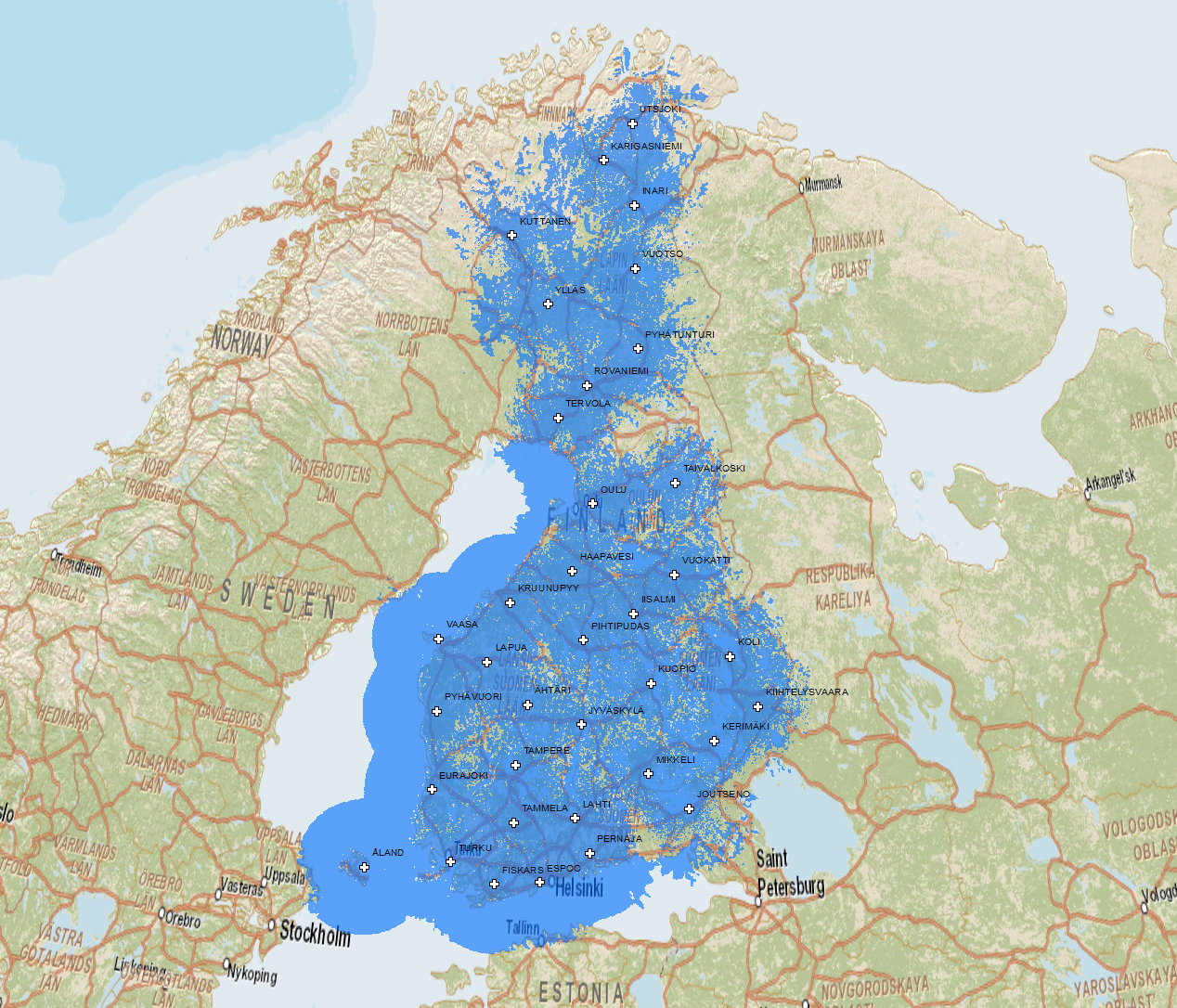
It is obvious that it is possible to create really large SFNs using DVB-T2 with the longest guard interval. In this example the distance between the two transmitters that are located farthest from each other is 1 125 km!
Below follows a table that presents how the results would change if we used other guard intervals.

The longest possible guard interval that can be used for the DVB-T system is 224 µs. Using that guard interval length for this national SFN would result in a great coverage reduction – according to the table above the population coverage would drop from 94 to only 38 percent.
It is obvious that SFNs enables the possiblity to use the scarce resource of spectrum more efficiently. But everything in life comes with a price tag attached. Two examples of disadvantages with large SFNs are:
- Large SFN requires a long guard interval that significantly reduces the capacity
- Large SFN limits the possibilities to provide regional services
–
Thank you for reading this article about some pros and cons regarding DVB-T2 and Large SFNs. There are a lot of more information to say about the calculation parameters, methods, and databases that have been used in this example. To restrict the scope of this article I have deliberately not addressed them. If you are interested in more information about the calculations, or if you want to give me feedback and discuss the results, or if you have any other question, do not hesitate to contact me.
 Pär Nygren